MonMon / Website planning
Vietnamese Businesses Selling Abroad: Build a Clear International Website
MonMon AI · Published
A Vietnamese business preparing to sell abroad needs to explain its offer to a reader who may know little about the company or its home market. An international website should make the products or services understandable, provide appropriate evidence and give prospective buyers a practical next step. Translation is part of that work, but it is not the whole brief.
Choose an audience before adding languages
Identify the customers and conversations the business intends to pursue. Decide which products or services are ready to present and which team will handle enquiries. Use that information to choose the first language versions. Do not imply that a company has distributors, offices or customers in a market simply because its website is available in that market’s language.
Write the offer for a new reader
Explain what the business supplies, the customer need it addresses and the information needed to assess an enquiry. Expand abbreviations that may be unclear to a first-time visitor. Use consistent product names, units and scope descriptions. A direct description is more useful than a broad claim about international quality that gives the buyer no basis for comparison.
Prepare evidence and a shareable profile
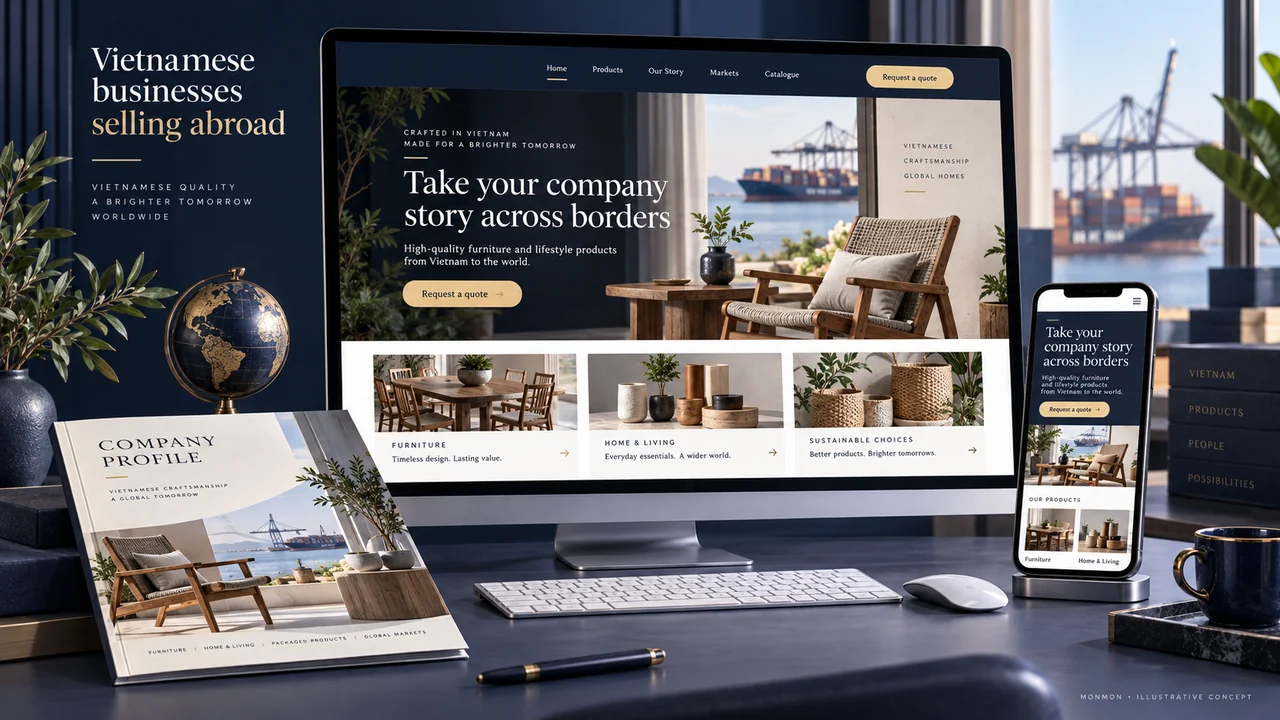
Select authorised product or project examples and explain what they demonstrate. Identify illustrative concepts separately from actual work. A company-profile PDF can support an overseas sales conversation when it uses the same offer, figures and contact details as the website. Define the document’s audience and purpose before choosing its length or visual style.
Review translations as business content
Create a glossary for company names, product terms and repeated service descriptions. Review quantities, units and contact routes alongside the text. Explain where a commercial detail needs confirmation rather than translating an unapproved promise into every language. When the offer changes, update the relevant language versions and downloadable materials together.
Connect publication to a workable sales process
Ask overseas visitors for the product or service, their requirement and a contact method. Add quantity or destination fields where relevant to the actual offer. At handover, check language switching, downloads and received enquiry details. After launch, track qualified enquiries and subsequent sales stages using real records. Publishing an international website is a deliverable; overseas revenue growth is a separate result to measure.
Your preparation checklist
- Target audience and response owner identified
- Clear product or service offer
- Consistent names, units and terminology
- Evidence accurately labelled
- Website and sales profile aligned
- Enquiry and language journeys tested
Frequently asked questions
Must the website launch in many languages at once?
No. Start with the languages the business can maintain and support, then expand based on actual requirements.
How is this different from an export product catalogue?
A catalogue focuses on individual product specifications and sourcing. An international company website also explains the business, its broader offer and the sales conversation it supports.