MonMon / Website planning
Logistics Websites: What to Ask in a Shipment Enquiry
MonMon AI · Published
A logistics website should help a customer identify a relevant service and give the operations or sales team enough information to assess a shipment. A general “contact us” message may omit the origin, destination or cargo details. Build the service pages and first enquiry around the decisions your team actually makes.
Describe the services and routes you support
Separate transport, warehousing and other services where the scope differs. State the locations or routes the business actually handles and how customers can ask about other requirements. Do not turn a map illustration into an implied promise of worldwide operational coverage. A precise service description is easier for a customer to evaluate than an unsupported list of every transport mode.
Ask for useful shipment context
Depending on the service, a first request may need origin, destination, cargo description, approximate weight or dimensions, quantity and preferred timing. Use labels customers can understand and identify which information is optional at the initial stage. If the team needs documents later, explain the next step rather than collecting unnecessary material in the first public form.
Separate a quotation request from a booking
Submitting a form should not imply that transport capacity, price or a collection time is confirmed. Explain who reviews the request and how confirmation occurs. Publish operational response times only when they are agreed and sustainable. The website should reflect the actual workflow rather than presenting a basic contact form as a transport management system.
Present operational evidence with context
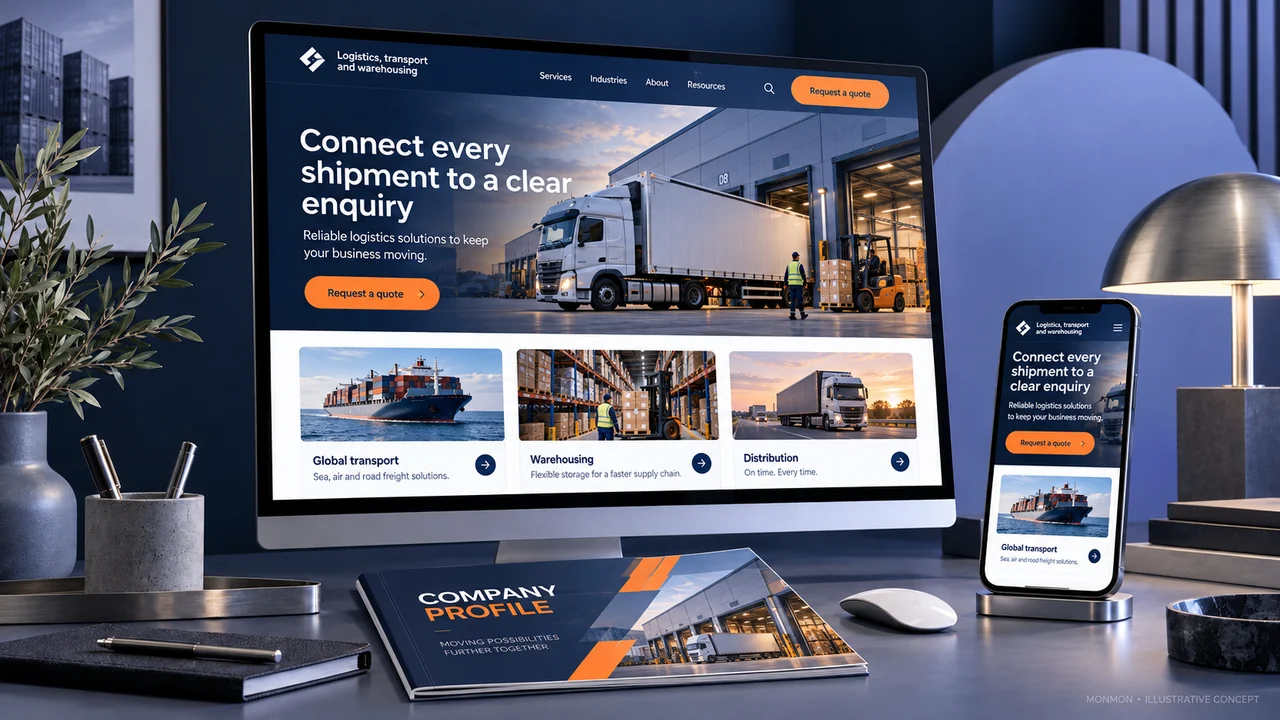
Use authorised photographs of relevant facilities or activities and say what they show. Explain the company’s role when work involves partners. Avoid presenting third-party infrastructure as company-owned or implying performance results that have not been measured. For warehousing, publish location and service details that the responsible operations team has reviewed.
Check routing and measure useful requests
At handover, test whether shipment enquiries reach the correct recipient with the selected service and entered details intact. Check forms and contact actions on a phone. After launch, review missing information, requests outside the service scope and enquiries that proceed to quotation. Those measures can support improvements without promising that the website will produce a particular shipment volume.
Your preparation checklist
- Actual service coverage stated
- Origin and destination captured
- Relevant cargo fields clearly labelled
- Enquiry distinguished from confirmed booking
- Facility and partner claims accurate
- Received enquiry checked during acceptance
Frequently asked questions
Should customers upload all shipping documents immediately?
Ask only for what the first review needs. Agree a suitable document-transfer process for the later stages.
Does a logistics website need shipment tracking?
Only if tracking is part of the agreed service and a real system supplies the status. A presentation website does not include that integration automatically.