MonMon / Website planning
Manufacturing Websites: Present Capabilities Before Asking for an RFQ
MonMon AI · Published
A manufacturing website should let a buyer judge whether a production enquiry is worth pursuing. The useful questions are concrete: which processes are offered, which materials or products are relevant, and what information is needed to assess the job? Structure the website around those questions before deciding how many pages to build.
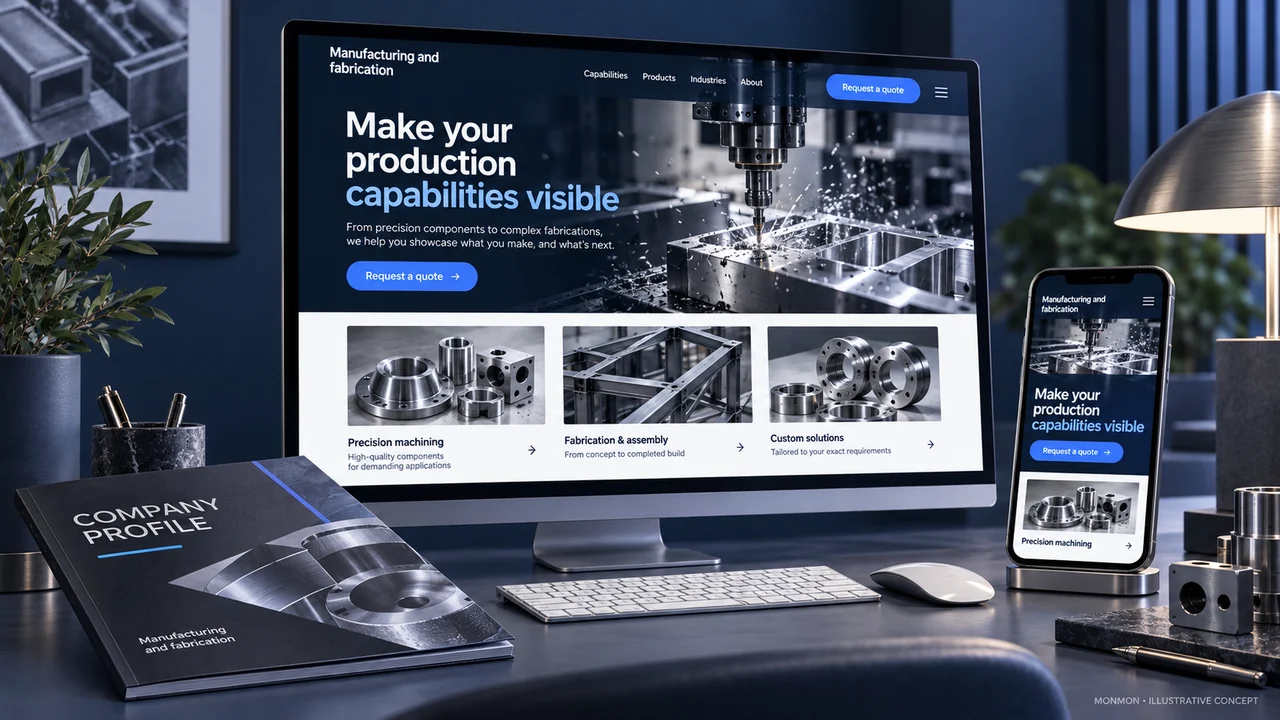
Separate products from production capabilities
A company may sell a defined product range, provide production to a buyer’s requirements or do both. Make that distinction visible. Product pages need identifiable items and specifications. Capability pages explain processes and the work the business can assess. A machinery gallery alone does not tell a buyer whether the business can produce the required part or accept a particular order.
Publish limits only when they are verified
Where relevant, list materials, process categories, equipment information and documented capability limits. Give figures the correct units and context. Do not convert the presence of a machine into an unsupported claim about output, tolerances or available production capacity. If feasibility depends on a drawing or sample, explain that the technical team must review the requirement.
Use representative work responsibly
A sample part or finished product can illustrate a process when the company has permission to publish it. Explain what the example demonstrates. Avoid displaying a buyer’s confidential drawing or design without authorisation. If an image is a concept used for the website design, label it as such and keep it separate from evidence of actual production.
Prepare the first RFQ carefully
Ask for the product or process, material where known, approximate quantity, required timing and a contact method. Agree a suitable route for drawings and other technical documents. Explain whether the first request starts a feasibility review or a quotation. Do not force buyers to invent an exact specification when an initial discussion is needed to establish it.
Keep the catalogue and handover verifiable
Use consistent product references, units and process names in the website and company profile. At acceptance, follow a product or capability page through to the enquiry and verify that context reaches the recipient. Check downloadable files and their versions. After launch, distinguish general enquiries from requests that the technical and sales teams can assess; that is a more useful review than counting every click as a sales opportunity.
Your preparation checklist
- Product and capability pages have distinct purposes
- Materials and process terms are consistent
- Numerical claims match records
- Client designs cleared for publication
- RFQ captures the information needed for review
- Downloads and enquiry routing tested
Frequently asked questions
Do we need an online price calculator?
Only when the quotation rules are sufficiently defined and that function is separately agreed. Many production enquiries need technical review first.
Should every machine have its own page?
Only if the machine information helps a buyer evaluate a relevant capability. Organising by process or application may be clearer.